
How Rooftop Solar Panels Work (Simple Guide)
A plain-language guide to how rooftop solar panels turn sunlight into electricity for your home — panels, inverter, net metering and what happens at night.
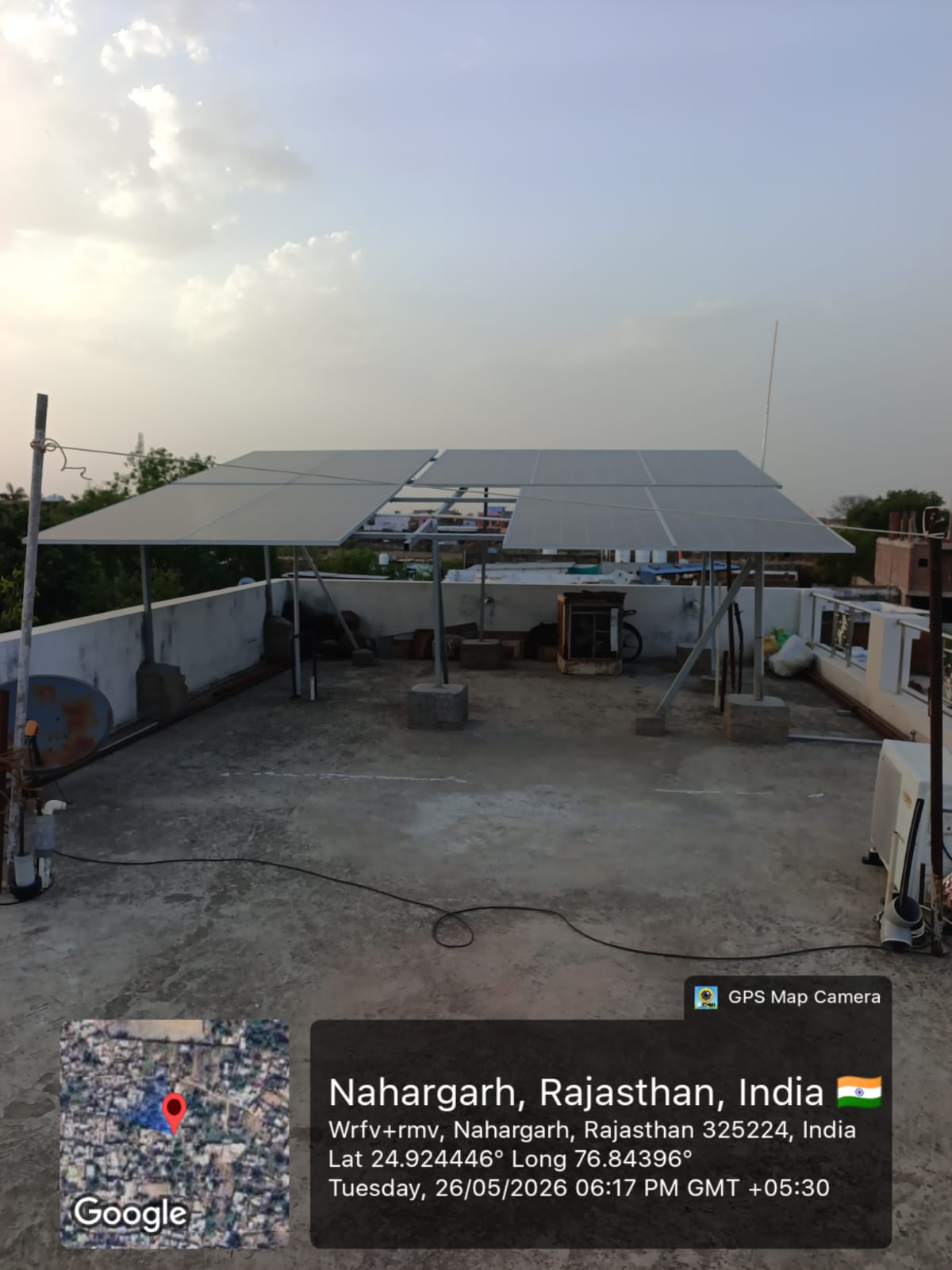
Rooftop solar sounds technical, but the idea is simple: panels on your roof catch sunlight, turn it into electricity, and your home uses that electricity before it buys any from the grid. This guide walks through each part of the system in plain language, so you know exactly what you are paying for.
The short version
- Sunlight hits the panels. Silicon cells inside each panel produce direct current (DC) electricity.
- The inverter converts it. Your home runs on alternating current (AC), so the inverter converts DC to AC.
- Your home uses it first. Lights, fans, fridge and pumps draw from solar power as it is produced.
- Extra power goes to the grid. When the panels make more than you use, the surplus flows out through a bi-directional (net) meter.
- At night you use grid power. When the sun sets, your home draws from the grid as usual, and the units you exported earlier offset your bill.
What happens inside a solar panel
A solar panel is a sheet of silicon cells behind toughened glass, held in an aluminium frame. When sunlight strikes a cell, it knocks electrons loose inside the silicon. The cell's structure pushes those electrons in one direction, and that flow is electric current. This is called the photovoltaic effect.
A single cell produces very little power, so a panel links 72 to 144 cells (or half-cells) together. Modern residential panels are typically rated between 540 and 600 watts each. A 3 kW home system therefore needs only five or six panels.
The inverter: turning DC into usable power
Panels produce DC electricity, but every appliance in your home expects 230-volt AC. The inverter handles that conversion. It also does three quieter jobs:
- Tracks maximum power. It constantly adjusts to pull the most energy from the panels as sunlight changes through the day.
- Syncs with the grid. It matches the grid's voltage and frequency so solar and grid power flow together safely.
- Reports performance. Most inverters today send generation data to a phone app, so you can see what your system produced each day.
If you want the detail on inverter types, read Solar Inverters Explained.
The other parts of a rooftop system
A reliable system is more than panels and an inverter:
- Mounting structure — hot-dip galvanised iron or aluminium frames that hold panels at the right tilt and survive wind loads.
- DC and AC cabling — UV-resistant solar cables sized to keep power losses low.
- Distribution boxes (DCDB and ACDB) — fuses, surge protection and isolators that protect the system and let a technician switch it off safely.
- Earthing and lightning arrester — essential on an exposed rooftop, and often the part cheap installers skimp on.
- Net meter — a bi-directional meter installed by your electricity distribution company (DISCOM) that records both units imported and units exported.
Where net metering fits in
Net metering is what makes rooftop solar pay off for most homes. Your meter counts two numbers: units you take from the grid, and units you send back. Your bill is based on the difference.
Say your 3 kW system generates 390 units in a month. You use 250 of those directly and export 140. At night and on cloudy days you import 180 units from the grid. You are billed only for 40 units (180 imported minus 140 exported), plus fixed charges.
Exact settlement rules vary by DISCOM — some settle monthly, others carry credit across a billing year — so ask your installer to explain the rules that apply to your connection.
How much power does a rooftop system make?
A well-installed, shadow-free system generates roughly 4 to 5 units per kW per day averaged across the year, with sunnier regions at the higher end. That works out to about:
| System size | Units per day | Units per month |
|---|---|---|
| 1 kW | 4–5 | 120–150 |
| 3 kW | 12–15 | 360–450 |
| 5 kW | 20–25 | 600–750 |
Want a figure for your own bill? Try our solar savings calculator.
What a rooftop system does not do
Two things surprise first-time buyers:
- A standard on-grid system switches off during a power cut. This is a safety feature that protects line workers repairing the grid. If you want backup, you need a hybrid system with a battery. See What Happens to Solar Panels During Power Outages?
- Shade matters a lot. A shadow from a water tank or a neighbour's building on even part of a panel can cut output noticeably. A proper site survey maps shade before any panel is placed.
Frequently asked questions
Do solar panels work at night?
No. Panels need light to produce electricity. At night your home draws from the grid, and the units you exported during the day offset that usage on your bill through net metering.
Do I need batteries for rooftop solar?
Not for a standard on-grid system. The grid acts as your "battery" through net metering. Batteries only make sense if you face frequent power cuts or want backup, and they add significant cost.
How long does it take to install a rooftop solar system?
The physical installation of a home system usually takes one to three days. The full process, including the site survey, subsidy registration and the DISCOM's net meter approval, typically takes a few weeks.
How much does rooftop solar cost?
It depends on system size, panel type and roof. Read our 2026 rooftop solar cost breakdown for current price ranges before and after subsidy.